Monday, April 13, 2015

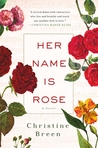
Her Name Is Rose: A NovelHer Name Is Rose: A Novel by Christine Breen

My rating: 4 of 5 stars


Look no further for a Mother’s Day or graduation gift, or a special treat for yourself. There’s a space in Irish women’s fiction right between wise Maeve Binchy and touch-of-magic Cecilia Ahern—and Christine Breen, with her wisdom, humor, and sheer good-heartedness, fits in it beautifully.

Her Name Is Rose is an exploration of love in many forms. Twenty years ago, Iris and her husband Luke adopted Rose. They had a wonderful life in Ireland together as a family for eighteen years. Then Luke died.  It’s two years later, and Rose has gone to London, accepted into prestigious Royal Academy of Music. Iris found some solace in gardening and blogging, but she’s naturally still grieving and she’s just been laid off her column at the local newspaper—and she’s just received troubling news after a mammography. How awful can life be? Rose could be left alone, both adoptive parents dead of cancer. Iris decides she must keep her promise to Luke to find Rose’s birth mother, just in case. But the system is set up for the “natural” offspring and parents to find each other, not for adoptive parents. It’s refreshing to read about the insecurities of the adoptive parent rather than the child, for once. But Rose gets her fair share of page time. She’s been raised with love and affection and is not full of angst; finding her birth parents is the farthest thing from her mind. She’s a young woman finding her talents—and possibly, romance.

Somehow, Iris finds herself in Boston, looking for Rose’s birth mother, before she even has her follow-up breast exam or diagnosis. Rose has a crisis and heads home to an empty house. Adventure, love, and mad coincidences ensue. This is my favorite kind of women’s fiction; everyday characters, ordinary problems, extraordinary situations looked at through lenses of love and kindness. The kind that leaves me with hope for the human condition and the world at large. Yes, it all works out in the end, and the journey itself is all pleasure.  Nice to have two female perspectives, of differing ages (Iris and Rose), and there’s a male perspective, too.

Highly recommended for fans of Binchy, Moyes, Mansell, etc. Also for those with an interest in love stories, music themes—Rose is not the only musician in the story—and gardening.  Miss Em is very much looking forward to more from this author!

(I received a galley from St. Martins for review.) And watch this space for a possible giveaway!


View all my reviews

Sunday, April 12, 2015

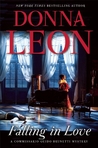
Falling in Love (Commissario Brunetti, #24)Falling in Love by Donna Leon

My rating: 4 of 5 stars


I’ve been reading Leon for 20 years, and I’m still in love. The mention of time is pertinent, since in this 24th book of the series we meet again an opera singer from the very first Brunetti mystery.  Venice, opera, family, politics, history—all of Leon’s loves are burnished with both nostalgia and the usual cynicism in this latest novel. Here, against Brunetti’s wholesome home life, loving and hopeful, is contrasted the very skewed “love” of a stalker (the mystery is, who is the stalker—which we find out; the why, the twisted, painful heart of the stalker, we will perhaps never understand.)
One reads these mysteries to spend time in Brunetti’s Venice, to appreciate, laugh, and curse along with the characters. One reads for the elegant prose, the wit and insight and idealism.  And the occasional multi-layered pun. Brava, brava, encore, please.
I received an EARC for review from the publisher and Netgalley.


View all my reviews

Saturday, April 11, 2015

The Dream Lover: A Novel of George SandThe Dream Lover: A Novel of George Sand by Elizabeth Berg

My rating: 3 of 5 stars


Short take for buyers: if you already enjoy historical fiction, it’s worth a shot. If you don’t, this book may not convert you—unless you download the book club kit, which is extraordinarily wonderful and will give context to those who missed out on reading French literature.

The delightful ambiguity of the title—Aurore Dupin/George Sand looking for the lover of her dreams, and as an artist and intellectual, loving dreams of love and freedom—becomes ambivalence.

Extensive research, exquisite description, some glorious chunks of prose are the reasons to read the book. It’s more like a novel of the nineteenth century than the twenty-first: a fictionalized autobiography, with plenty of room for philosophizing and reflection, less concentration on plot. The duality extends to the structure. The book bounces between Sand’s childhood and her present-in-the-book, except that “present” time stretches from her twenties to her death at 72. For me, that imbalanced structure and the first person viewpoint actually distanced me from the character instead of drawing me in. 

Berg's work in general is an exploration of the many forms of love, and this novel does fit into Berg's overall oeuvre in that sense. I think she does justice to Sand's life, and there are moments when Sand's character comes to life—moments that shine like scattered gems. Because of its difficulty and its beauty, you can see why ratings range from 2 to 4. I’m right there in the middle, with a 3, and an extra half-star for the online reading guide.

I recived an EARC for review from the publisher and Netgalley.


View all my reviews

At the Crossroads of Should and Must is the Eternal Yes

The Crossroads of Should and Must: Find and Follow Your PassionThe Crossroads of Should and Must: Find and Follow Your Passion by ELLE LUNA

My rating: 4 of 5 stars


Crossroads of Should and Must
is an almost perfect book for creatives, or right-brain thinkers, to find and do their passions. I love the concrete suggestions for doing your passions even if you can’t figure out how to make your passions into your career. The exercises involve drawing and doodling and observing—giving you a way to view your life and habits objectively in order to deduce what is supremely important to you. We fool ourselves about what’s important often, it seems. In a sense, this book is  your own little retreat/workshop, handy for both exploring and getting back on track. There’s a lot of wisdom packed into just a few pages. (The only thing that kept it from being perfect is the last vignette, which seemed pretty judgmental. You can’t tell someone else’s “must” from one conversation, or how they’ve prioritized their “musts,” plural.)  I think this is a great addition to the genre, and plan to use and give it often! 

I received a temporary EARC of the book for review from the publisher and Netgalley.


View all my reviews

Something to sink your teeth into...


By Tooth and ClawBy Tooth and Claw by Bill Fawcett

My rating: 4 of 5 stars


I loved this entry into the Clan of the Claw universe. Exiled: Clan of the Claw set up the worldview with the “dinosaur” vs. “mammal” competition—dinosaur lords enslaved the cat peoples, and a cataclysm on this part of the planet has allowed for a more overt than covert rebellion. It’s standard fare for exploring a lot of issues. What I particularly enjoyed about this book and hope is expanded in the next entry is the intriguing concept of dance magic. There’s a mix of magic and mental and manual technology. The cats follow core shamanic practices, and are the dancers. There are a lot of bard stories with magical music of instrument and voice, and there are stories with dancers as assassins, but there haven’t been a lot of dancer magicians—dancers, period—in the SFF pantheon. Dancers are usually thrown in with actors and prostitutes—entertainers and seducers. There’s the Robinson’s Stardance series, and I remember a story in which first contact on Earth was facilitated by dance as communication, but this promises a lot more depth if continued. Anyway I love how the concept’s being carried out.  Yes, buy!

I received an EARC for review from the publisher and Netgalley.


View all my reviews

Tuesday, March 17, 2015

The Next Species: The Future of Evolution in the Aftermath of ManThe Next Species: The Future of Evolution in the Aftermath of Man by Michael Tennesen
My rating: 4 of 5 stars

I wish everyone would read this book. It’s a well-researched popular science overview of the current climate picture and the history of mass extinctions on the planet. It’s a step above Discovery Channel or NatGeo television, but not so high a step that members of Congress, for instance, couldn’t understand it.  It’s hard not to be angry when there’s so much of our planet’s life at risk, and the author does a much better job than me, taking the approach of “How did we get here and what happens next?”

As well as the past and present, Tennesen takes us on a speculative journey to mankind’s future, on-planet and off. Which is a little scary, because some of the folks he talks about going to Mars plan to pretty much treat that planet the same way, filling it with nuclear waste whilst terraforming.  So we are left with the central question: will humans survive to live new futures?

The problem with the future is not climate change, but humans. We are animals that move into a place, use up the resources, and move on. We pretend that our brains and perceptions make us better than all the other animals on the planet, but a look at current policies and behaviors proves our hubris. Climate change is happening, and the only real power we have is to adapt and possibly mitigate the effects.

“Extinction in reality is a simple process…This will come for man (sic) in five hundred, five thousand, or fifty thousand years as current rates of overpopulation, disease, or all the possibilities listed above continue. Toss in a nuclear war, an asteroid (a regular occurrence in our geological history), or a supervolcano (a major factor in the Permian and Cretaceous) and we’re there much faster.”

‘Stopping man from killing himself will take more than behavioral modification. Like a world of dieters fending off hunger, we would have to push back from the table of reproduction, renounce growth, and limit our use of natural resources in order not to hit that fatal inflection curve—to avoid the catastrophe of nature making those selections for us.”

Like most people handed a fatal diagnosis, the human race has been focusing on rage and denial. In fact, the diagnosis is more that of a chronic illness. It would be wise for us to curtail certain behaviors. Like children, the race is acting out—we’d rather fight than switch, die than change. No matter what we do, our children inherit a diminished world—though they have the opportunity, as did we, to adapt and change. What will change first, humans to fit into the world, or Nature, to make a world unfit for humans (and incidentally, most current living things)? The author leaves room for hope.

Life is amazing and wonderful and tenacious and will continue after humans, but we could grow and change with it—evolve. I hope there’s a grassroots miracle of small living and sustainability; it seems pretty obvious that the powers-that-be intend to leave a legacy of ashes and stone.

I received an EARC from the publisher and Netgalley for review.


View all my reviews

Monday, March 16, 2015

Clash of EaglesClash of Eagles by Alan Smale
My rating: 4 of 5 stars

It's a strong beginning to an alternate history series, pitting an unfallen Roman Empire against the Moundbuilding cultures of the Mississippi in the approximate 1200 AD analog of our world. Whilst the background details of wider history are a bit fuzzy, the world comes alive in the physical and psychological story of a "superior" culture discovering the dangers and audacity of assumption. What will happen to a Rome facing a continent bigger than its current empire?  What influence will Rome have in this new environment?

Smale does an excellent job of showing the tensions between cultures. Even without Rome in the mix, the Iroquois Confederacy and the Cahokian Alliance have been involved in an ever-escalating war, one every tribe on two continents may have to deal with. To them, a Roman incursion is a mere blip in a much larger scenario—or is it? The pleasures of reading alternate history are mostly about speculation: “What if?” “What happened to?” There is also pleasure to be had in the opportunity to re-examine history. Smale provides the opportunity for both pleasures, and tells a good story, too!  I usually don’t care much about the tech details of these kinds of stories, but the hero and I share a fascination here, hopefully explored in more detail in the next books.

For sheer inventiveness and setting, I was reminded of Kurt A. Giambastiani’s alternate Cheyenne Alliance adventures, though they’re an imaginary 600 years later. Well-researched, with an index and guide to further reading, Clash of Eagles is highly recommended for those who enjoy historical and speculative fiction with a thoughtful pace.

I received an EARC of the book from the publisher and Netgalley for review.


View all my reviews